Turn value selling into a system
Your value story gets judged in rooms your seller will never enter. Whether it holds up there shouldn't be left to chance.
A conversation about your commercial organisation, not a product demo. If we're not the right answer to what you describe, we'll say so.
A short introduction to ValueNova®.
THE COMMERCIAL REALITY
Discounting. Stalled deals. Missed targets.
You've invested in enablement, methodology, training and value expertise — often including a specialist value engineering team. Yet how well value lands still varies with whoever happens to be running the deal — and rarely survives the rooms your team never enters.
Discounting fills the gap
When value isn't established early, price becomes the only lever left. Margin leaves the deal to keep it alive.
Practice varies by seller
Some sellers build a compelling commercial case. Others improvise. The same offer lands very differently across the team.
Deals lose momentum
Opportunities stall or go quiet once the conversation moves beyond the person you've been talking to.
Forecasts get harder to trust
When value is inconsistent, so is conversion. Revenue performance becomes harder to control and harder to predict.
None of this is an effort problem.
THE REFRAME
Stop relying on individual heroics.
Your strongest sellers should not be the only people capable of creating a credible value conversation. The issue isn't effort. It's the absence of a governed system that makes value selling repeatable across the whole team.
More training. More templates.
Each wave lifts the people who were already strong. The distance between your best sellers and everyone else stays roughly where it was.
Talent doesn't transfer
The judgement that makes a value conversation credible sits with individuals. When they move on, or scale beyond a handful of deals, it doesn't come with them.
Governance, not effort
Value selling becomes dependable when it is governed — held to a standard the business owns, rather than reinvented deal by deal.
Value selling shouldn't be a talent. It should be a system.
Governance sets what a credible value conversation looks like. Intelligence makes working to that standard practical on every deal — not just the ones with a specialist attached.
For the CRO
Greater control over how value is sold
Revenue leaders can influence pricing, territory and coverage with precision — but how value is established in each deal is usually left to chance. A governed approach makes that part of the business controllable too.
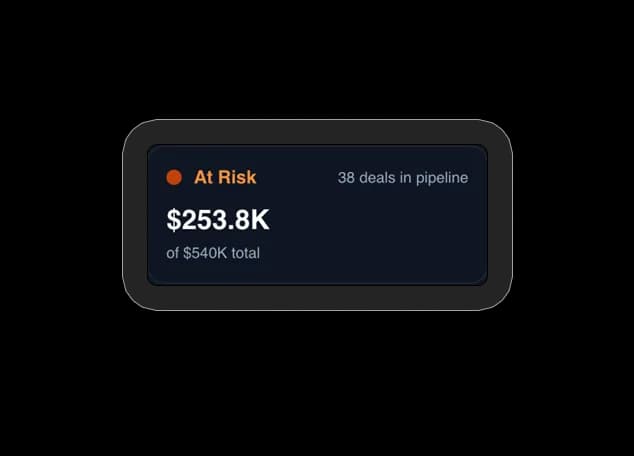
Pipeline at risk
$253.8K

WHAT CHANGES
Protect value. Keep deals moving. Improve consistency.
Less variation between your best and your average
When value is established the same way on every deal, performance stops being a function of who happens to be running it. The standard your best sellers set becomes the standard everyone works to.
Less reflexive discounting
Price pressure is answered with value rather than concession. Fewer deals are bought back with margin at the end of the quarter.
Fewer deals that quietly stop
Value that buyers can carry internally keeps opportunities moving through the stages where they usually go quiet.
WHY NOT THE OBVIOUS ANSWERS
You could build this. You won't build what we're building.
Every revenue leader has already tried at least one of these. They all improve the output. None of them changes how consistently value lands.
Training lifts the people who were already strong
It doesn't change what happens on the deals your best people aren't on. The distance between them and everyone else stays roughly where it was.
They set the standard. They're also the constraint
There are always more deals than specialists, so the standard only reaches the deals big enough to justify one.
It produces artefacts
Your problem isn't a shortage of artefacts — it's that the case falls apart the moment your seller leaves the room.
It will write you something plausible
Plausible doesn't survive the second meeting. What reaches a buyer has to be defensible by the person presenting it.
THE ROLE OF AI
AI-assisted. Governance-led.
Intelligence where it matters. Control where it counts.
The standard comes first
The organisation decides what good looks like. Intelligence works inside that standard rather than around it.
Assistance, not autopilot
Judgement stays with your people. AI removes the friction around the value discipline — it doesn't take the discipline over.
Built for value selling
General-purpose tools produce plausible language. Value conversations survive scrutiny because they are grounded in a discipline, not a prompt.
Nothing arrives unexplained
What reaches the buyer should be defensible by the person presenting it. That constraint shapes everything.
AI supports the value discipline. It doesn't replace the governance around it.
THE BUYER'S REALITY
Your champion still has to sell the value internally
Belief doesn't transfer on its own. What your champion can rebuild from memory, under questioning, is the only part of your value story that actually reaches the decision.
The room you're in
Where the value conversation starts
A strong conversation with your champion is the beginning of the process, not the end of it. Belief is established — but it isn't yet portable.
The rooms you're not in
Finance, procurement, the buying committee
The case is retold by someone with less context, under more scrutiny, to people who were never part of the original conversation.
The decision
Where value either holds or fades
Deals rarely die because the value wasn't there. They stall because it didn't survive the journey to the people who sign.
FOR VALUE LEADERS
Scale value discipline beyond the specialist team
Value expertise is rarely the problem. Reach is. ValueNova is built to extend the influence of the people who already set the standard — so value practice reaches further while the quality of the discipline is protected.

Value leaders
Your team sets the standard for value practice — and is usually the constraint on how far it reaches. Extend that standard well beyond the deals big enough to justify a specialist, without diluting it.

Revenue leadership
Value discipline stops being something a specialist team applies to selected deals and becomes something everyone works to.

The wider sales organisation
Sellers who never had access to a value specialist work to the same standard as the deals that did — without being asked to become value engineers.
BEYOND THE DEAL
Value shouldn't stop at signature
The strongest value conversations create confidence before the decision and accountability beyond it.
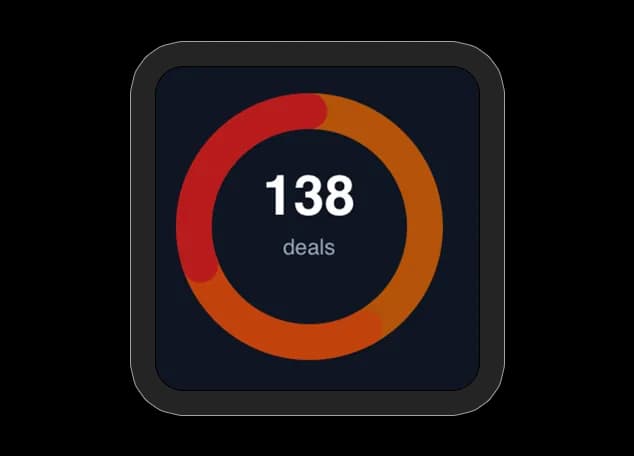
Illustrative interface
Confidence before
The value a buyer commits to should be something they still recognise months later.
Accountability after
What was promised in the deal shouldn't quietly become someone else's problem at handover.
Continuity, not restart
Renewal and expansion conversations are easier when they continue a story rather than begin a new one.
One version of value
Sales, delivery and the customer working from the same understanding of what value meant.
SELF-ASSESSMENT
How much of your value story survives the rooms you're not in?
Four questions. No email required.
How repeatable is your value work today?
Want the reasoning behind each stage? Open the full Value Maturity Lens or read the framework in Value Engineering as a System, Not a Slide.
PERSPECTIVES
How we think about value selling
Writing for revenue and value leaders on the discipline behind credible commercial conversations.
Or start with our original research, The State of B2B Business Cases 2026, or the free business case tools and calculators.
FAQ
Common questions
Tell us where it's breaking down
The deals that discount. The ones that stall. The variation between sellers. Start anywhere.
A conversation about your commercial organisation, not a product demo. If we're not the right answer to what you describe, we'll say so.